











SANDU, Guizhou – Fueled by the viral “Guizhou Village Horse Racing” (Village Ma) brand, Sandu Shui Autonomous County has witnessed explosive growth in cultural tourism. In 2025 alone, the county received 6.22 million visitors, with tourism revenue surging from 2.885 billion yuan to 6.096 billion yuan, both figures more than doubling. From January to September 2026, it welcomed 5.41 million tourists, generating 5.416 billion yuan in tourism income, up 9.84% and 8.94% year-on-year respectively. Since the inaugural race in 2023, the events have drawn over 22 million visitors, created local jobs for more than 30,000 residents, and lifted individual annual income by over 3,000 yuan. These striking statistics bear testimony to the booming momentum of Sandu’s cultural tourism sector.
The Shui ethnic community in Sandu has a long-standing tradition of raising, loving and racing horses. What began as Duan Festival hilltop horse races has grown far beyond the Qiannan mountains into a nationally famous Guizhou cultural tourism IP. Riding the wave of popularity brought by Village Ma, the county’s tourism economy keeps expanding steadily. A single horse industry is driving local prosperity, painting a vibrant picture of “one horse taking the lead and all industries thriving”.
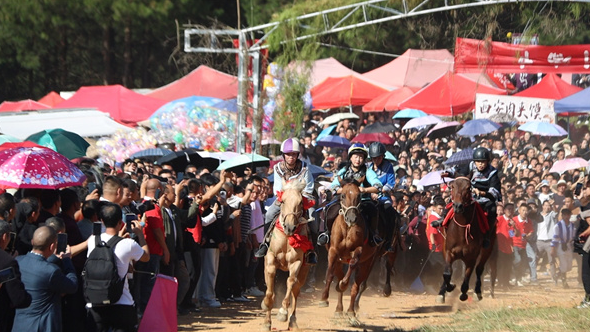
Folk Tradition Transformed: Hilltop Races Become a National Brand
On October 5, the grand final of the 4th National Invitational Tournament of Guizhou Village Ma for the 2026 Duan Festival kicked off. Over five days of fierce competition, more than 80 riders and 145 fine horses from 14 provinces, municipalities and autonomous regions across China competed, with 40 horses advancing to the final showdown. Ethnic residents and tourists gathered at the Sandu Equestrian City, celebrating National Day and the Duan Festival amid thrilling races and immersive Shui ethnic culture.
“It’s such a unique event. This is my first time watching equestrian shows and seeing so many riding skills. It was spectacular and delightful, and I hope to come back again,” said visitor Liu Zhimin.
Shi Shaozhang, a young local Shui rider, embodies this transformation from folk custom to internet-famous brand. He first rode on Duan hill slopes at the age of eight and has since claimed multiple championship titles. “We used to race on rough hill tracks. Now standardized professional courses give local riders a much bigger stage,” Shi shared.
For generations, horse racing was merely a spontaneous pastime during the Duan Festival, with scattered contests and no fixed venues. That changed in 2023. With strong backing from the county government and professional operation by Guizhou Race City Culture and Sports Co., Ltd., the centuries-old hoofbeats echoed beyond the mountains. “Government support allows us to host more and larger races, bringing exponentially more spectators,” said Qin Yunfeng, General Manager of the company.
Sandu has systematically upgraded casual folk gatherings into formal modern competitions, establishing standardized event management, professional judging and robust safety protocols. A three-tier competition system has taken shape: regular village races, Duan Festival leagues and national invitationals. New ethnic equestrian disciplines such as horseback archery have been introduced, while exchange platforms have been built with horse-culture regions including Inner Mongolia. Since 2023, 189 events have been held, attracting over 4,500 horses and 3,000 riders from Xinjiang, Inner Mongolia, Shanxi, Hebei, Hubei, Zhejiang, Yunnan and other provinces. Related online topics have exceeded 5.2 billion views, and Village Ma has been recognized as an Outstanding Chinese Sports Cultural Project.
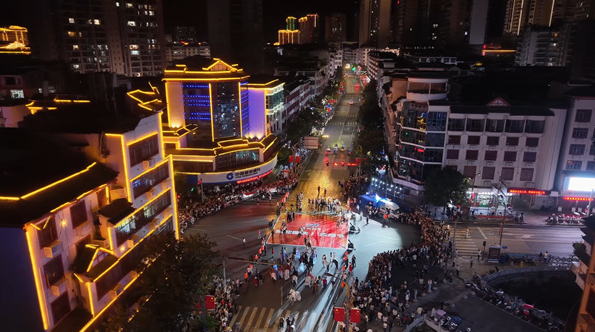
All-for-one Tourism: One Horse Vitalizes the Whole County
The 8th stop of the 2026 Guizhou Village Ma Village League was held at Tangzhou Duan Slope in Zhonghe Town. The venue buzzed with crowds, and resonant bronze drum music reverberated through the hills. Locals dressed in splendid ethnic costumes greeted guests warmly. Beside the track, an agritourism exhibition area teemed with visitors browsing local farm specialties, many of whom took home authentic rural produce.
“I tasted authentic Shui dishes here and admired their exquisite ethnic costumes. The experience was wonderful,” commented visitor Tian Wenchao.
Leveraging the Village Ma IP, the “competition plus rural experience” model has spawned diverse integrated agritourism formats. During the May Day holiday, Dayu Fishing Village in Dujiang Town capitalized on the buzz. Drawing visitors via short-video campaigns, it launched fishing, wilderness camping, bonfire parties and parent-child fish-catching activities. Parent-child fishing was the most popular attraction, alongside lakeside camping, angling and folk performances. The flood of tourists also boosted local street vendors selling roasted chicken, snacks and fresh fruits. “We are tapping into the Village Ma brand to build our own village fishing experience,” said Cen Zhongwei, Party Secretary of the village.
Thanks to the traffic generated by Village Ma, Zenei Village, an ancient Shui hamlet tucked deep in the mountains of Dujiang Town, has embraced cultural tourism. Centered on boutique homestays and intangible cultural heritage experiences, it turns natural scenery and ethnic culture into “beautiful economy”, blazing a rural revitalization path: Village Ma attracts visitors, homestays retain them, and culture prospers the village.
“The locals are very genuine, and the place is not over-commercialized. I tried the Shui horsetail embroidery costume and styling — it’s a national intangible heritage, absolutely gorgeous,” visitor Guo Miao said.

Industrial Extension: Study Tours and Talent Gathering
As Guizhou Village Ma gains nationwide fame, educational study tours have become an important extension of the industry. Relying on the Equestrian City and heritage workshops, Sandu has developed packaged study itineraries combining riding experiences, horse-racing culture, horsetail embroidery and Shuishu (ancient Shui script). Thousands of young students from inside and outside Guizhou come on educational visits every year. Visitors are no longer mere spectators; they can ride horses, learn embroidery and ancient writing, and enjoy Shui long-table feasts.
“The trip exceeded expectations. I watched the thrilling races, tried horsetail embroidery, learned about Shuishu and savored local food. Strolling along the Duliu River at dusk with cool breezes and night views was perfect. It was a rewarding journey,” said tourist Pan Yueying.
“Guizhou Village Ma is far more than horse races. It carries our age-old equestrian heritage and the pioneering spirit of the Shui people. It is an ideal study tour resource for teenagers. We received more than 10,000 student visitors in the first half of this year alone, and I am upbeat about the future,” said Wei Huipo, person in charge of Village Ma study tours in Sandu.
The IP also draws entrepreneurs from across the country. Riders and horse lovers travel to Sandu to compete, raise horses and start businesses, enriching the events.
Huang Pingguo, originally a visitor from Hunan, fell in love with the rustic equestrian charm and settled down in Sandu to open “Village Ma Courtyard”, an integrated base for racing viewing, horseback archery and riding experiences. “I have lived here for four years and witnessed the races grow more professional year by year. The tracks keep upgrading, and riders are getting better and better,” Huang shared.
Hoofbeats drive revitalization; one thriving sector fuels many others. From informal hilltop contests to a top-tier Guizhou tourism brand, from a single folk event to an industrial cluster integrating races, riding, heritage, study tours and rural experiences, Guizhou Village Ma delivers both on-track excitement and forward momentum for Sandu’s high-quality development. Aiming to build itself into a renowned tourist county, Sandu will keep focusing on resources, tourists and services, deepen horse cultural development and strengthen the Village Ma IP to advance integrated culture, sports and tourism. It will help Shui intangible heritage shine anew in modern times, steadily raising local incomes and writing a new chapter of rural revitalization for ethnic regions.
“We have explored a distinctive path of integrated culture-sports-tourism development for ethnic minority areas, yielding tangible results. Going forward, we will center on building a top tourist county, prioritizing the core Village Ma IP. Following the ‘one city, one circle, multiple sites’ layout, we will improve tourism supply, expand the race matrix, extend the full horse-culture industrial chain, upgrade supporting facilities and marketing, and turn event traffic into sustainable industrial growth, so that more residents share the benefits of tourism,” said Li Jie, Full-time Deputy Director of the Sandu Shui Cultural and Tourism Park Administrative Committee.